Most small product businesses operate without a formal bill of materials for years. They know their products well enough to order by habit. Then demand increases, a team member takes over ordering, or a component changes - and the gaps in the informal system become expensive mistakes.
What a Bill of Materials Actually Is
A bill of materials - sometimes called a BOM - is a structured document that lists every raw material, component, sub-assembly, and packaging item required to produce one unit of a finished product. It is the single source of truth for what goes into your product.
If you cannot hand your bill of materials to someone who has never made your product and have them order everything correctly, it is not complete enough.
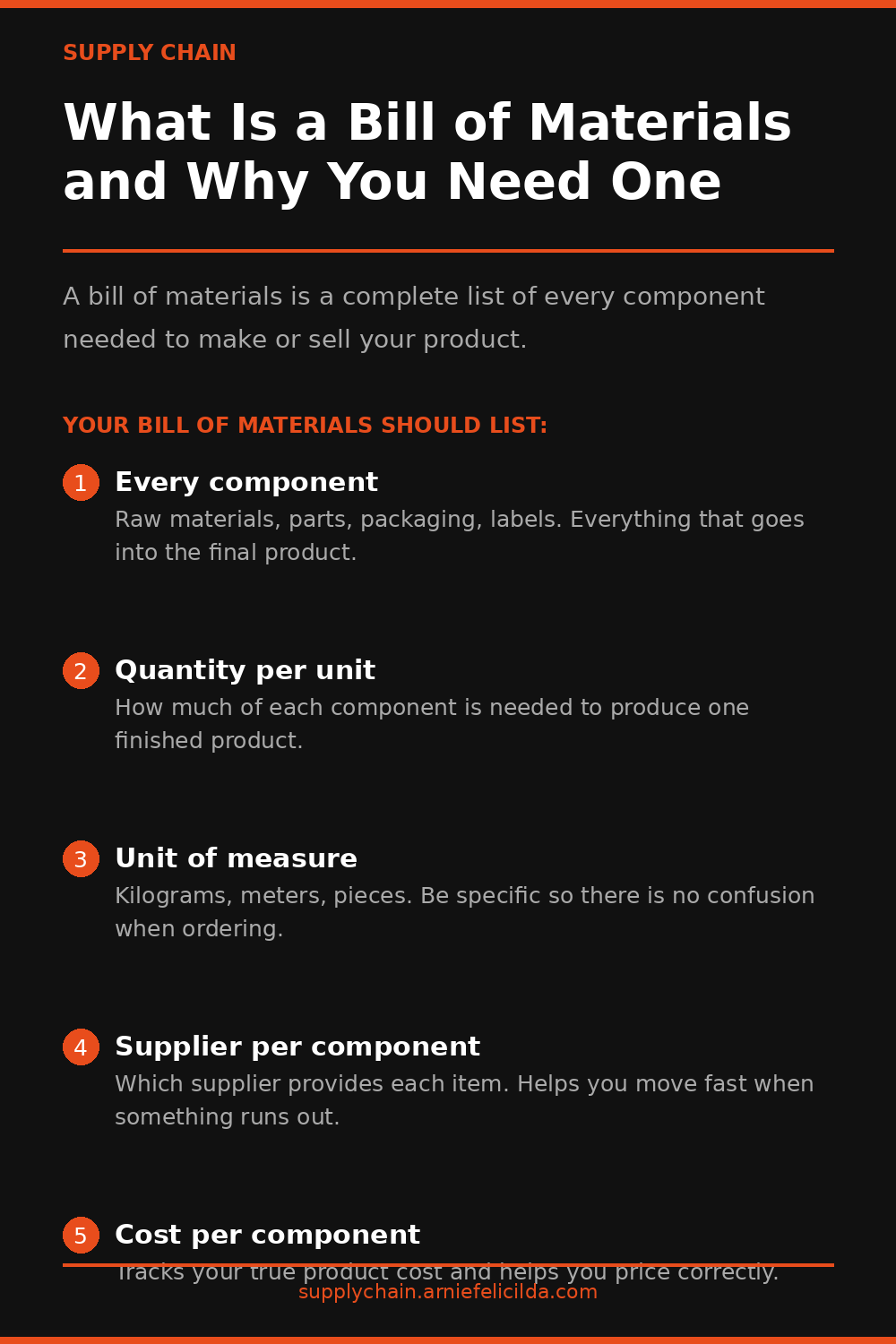
What Your Bill of Materials Should Include
Every Component
Raw materials, parts, sub-assemblies, packaging, labels, inserts, and any consumable used in production. If it goes into or onto the finished product, it belongs on the bill of materials. Missing one component means an incomplete order every time.
Quantity Per Unit
How much of each component is needed to produce one finished product. Not an estimate - the exact quantity. If you use 1.2 meters of fabric per unit, write 1.2 meters. Rounding up or down at this stage creates cumulative errors across large production runs.
Unit of Measure
Kilograms, meters, liters, pieces, rolls. Be specific and consistent. A component listed in grams while your supplier invoices in kilograms creates confusion and ordering errors. Standardize the unit of measure to match how your supplier sells.
Supplier Per Component
Which supplier provides each item. This allows anyone on your team to reorder any component without asking for clarification. It also makes it immediately clear which supplier is affected when a component runs short.
Cost Per Component
The current unit cost of each component. This makes your bill of materials a cost sheet as well as a production reference. When costs change, update the bill of materials. This keeps your product cost calculations accurate without a separate exercise.
How to Build Your First Bill of Materials
Start with your highest-volume product. Build the list from scratch by physically assembling or reviewing one unit and writing down every component you touch. Weigh or measure each component to get exact quantities. Then add supplier and cost information from your last purchase orders.
Once the first one is complete, the rest follow the same structure. A spreadsheet is sufficient for most small businesses. The format matters less than the completeness and accuracy of the information.
For more on this topic, read What Is a Purchase Order and How to Use It. You may also find How to Find a Reliable Supplier for Your Business useful for the next step.
Coming Soon - SCM Book 01
Inventory Without the Anxiety
Practical inventory control for small business owners and managers tired of stockouts eating their margins and overstock draining their cash flow. Join the waitlist.
Join the Waitlist