Most small businesses skip the purchase order because it feels like extra paperwork. Then a supplier ships the wrong quantity. Or a different product. Or charges a price that was never agreed to. And there is nothing in writing to resolve it with.
A purchase order is not bureaucracy. It is the document that makes every supplier conversation enforceable. Here is what it must include and how to use it.
Why a Purchase Order Matters
When you place an order verbally or by email without a formal purchase order, you are creating an informal agreement that is difficult to enforce. Suppliers receive dozens of orders. Details get confused. Prices change. The product you discussed may not be the product that ships.
A purchase order creates a paper trail that both parties sign off on before production or shipment begins. If anything arrives incorrect, the purchase order is the reference document that resolves the dispute.
Any order above your personal loss threshold - the amount you could not afford to lose - deserves a purchase order. For most small businesses that means any order above a few hundred dollars.
What Every Purchase Order Must Include
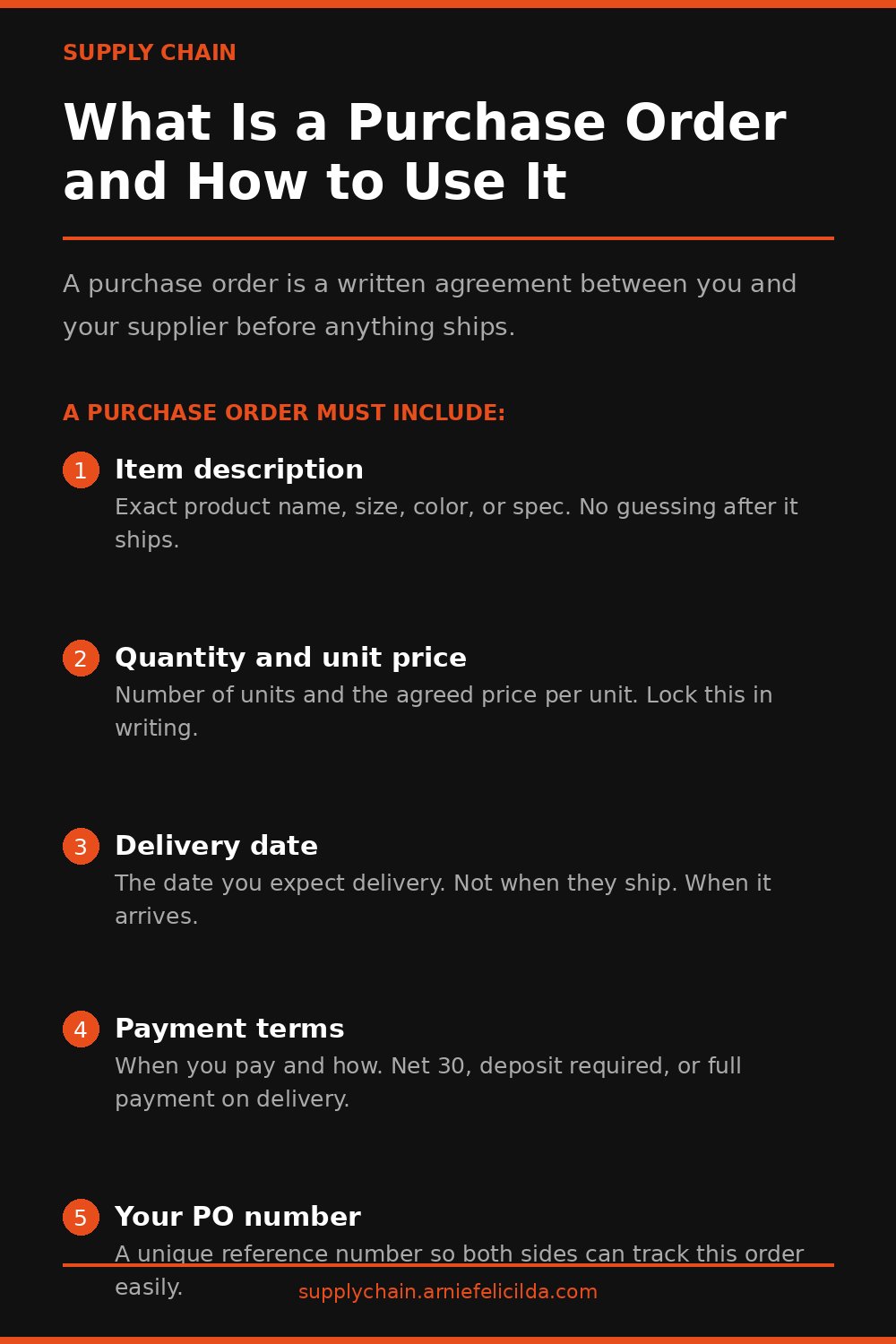
Your PO Number
A unique reference number you assign to this order. This is how both you and your supplier track the order through production, shipping, and payment. Every future conversation about this order refers to this number.
Exact Item Description
Product name, SKU, size, color, material, or any specification that defines exactly what you are ordering. Vague descriptions create room for the wrong product to arrive. Be specific enough that there is only one possible interpretation.
Quantity and Unit Price
Number of units and the agreed price per unit in the agreed currency. This locks in both the quantity and the price before anything ships. If the supplier later tries to change the price, the purchase order is your reference.
Delivery Date
The date you expect the goods to arrive at your location. Not the date they ship. The date they arrive. This distinction matters for planning your stock levels and customer commitments.
Payment Terms
When you pay and how. Net 30, 50 percent deposit with balance on delivery, or full payment before shipment. Whatever was agreed goes here in writing so there is no ambiguity at invoice time.
How to Use a Purchase Order in Practice
Create the purchase order before you place the order, not after. Send it to your supplier and ask for written confirmation before production begins. That confirmation - even a simple reply email - creates a binding agreement.
Keep every purchase order on file for at least two years. When a dispute arises months later, the purchase order is the only document that can resolve it quickly. Without it, every dispute becomes a conversation about who remembered what correctly.
For more on this topic, read How to Find a Reliable Supplier for Your Business. You may also find How to Negotiate Better Payment Terms With Suppliers useful for the next step.
Coming Soon - SCM Book 01
The Resilient Supply Chain
Supplier relationships, risk planning, and operational continuity for managers who cannot afford a disruption. Join the waitlist to be first when it drops.
Join the Waitlist