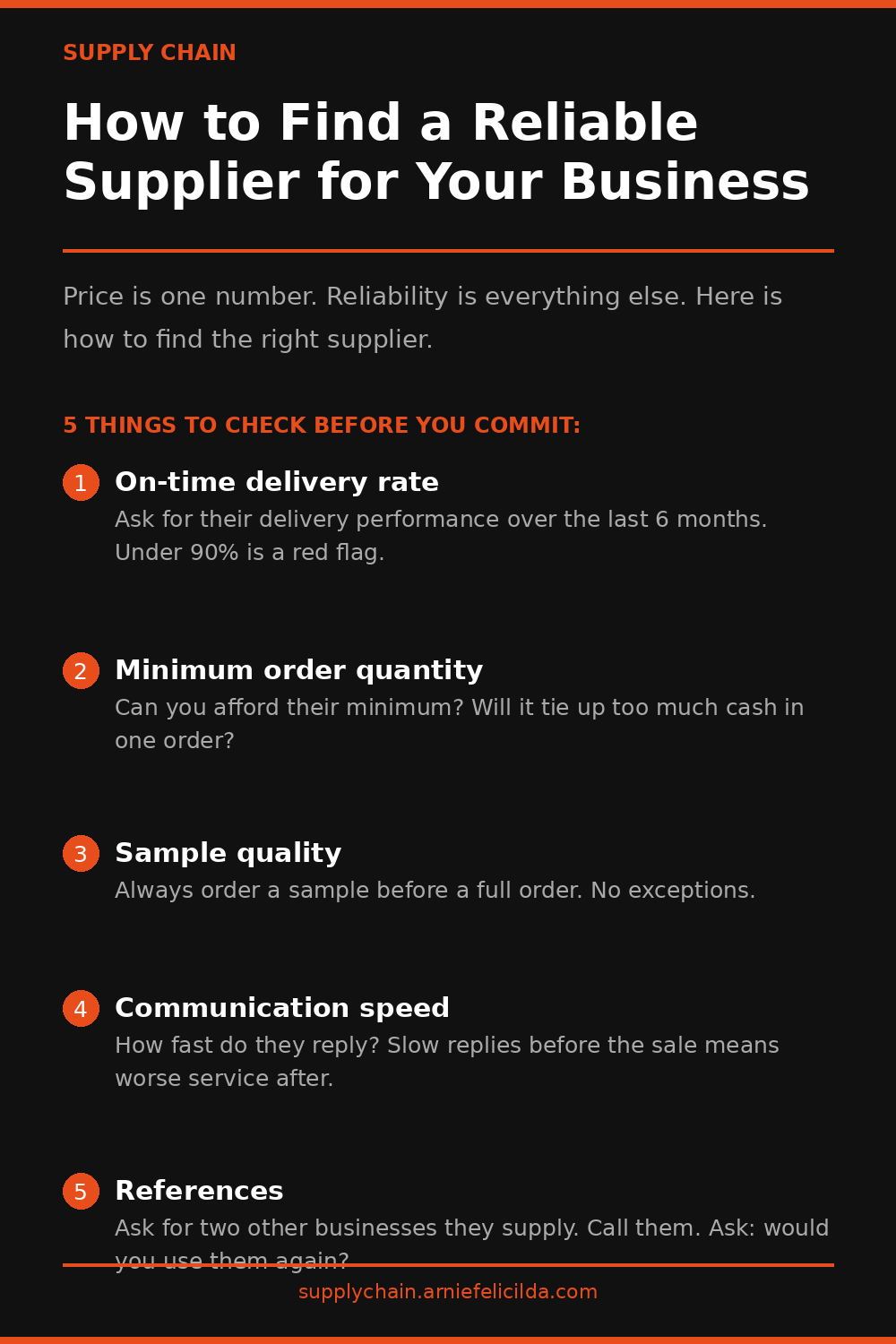
Most businesses find their suppliers through a quick search or a referral and commit based on price alone. That works until the first disruption. Then the real cost of an unreliable supplier becomes clear - emergency orders, expedited freight, lost customers, and the hours spent chasing updates.
Finding a reliable supplier takes more than comparing quotes. Here are five things to check before you commit.
The Real Cost of an Unreliable Supplier
When a supplier misses a delivery, you do not just lose the order. You lose the time spent chasing it, the customers who could not be served, the emergency freight costs to fill the gap, and the trust you built with your customers over time.
The cheapest supplier is rarely the least expensive supplier. Total cost includes quality, lead time reliability, communication, and what happens when something goes wrong.
5 Things to Check Before You Commit
On-Time Delivery Rate
Ask for their delivery performance data over the last six months. A reliable supplier can provide this. A supplier who cannot or will not is telling you something. Any rate below 90 percent means roughly one in ten deliveries will be late. For a business that orders monthly, that is one late delivery every ten months - guaranteed.
Minimum Order Quantity
Can you afford to meet their minimum on every order? Will that minimum quantity tie up more cash than you want in a single supplier? A supplier with a high minimum forces you to hold more inventory than your demand requires, which increases your carrying cost.
Sample Quality
Never commit to a full order without receiving and inspecting a sample first. The sample represents the best they will send you. The ongoing production quality is often lower. If the sample is acceptable but not excellent, expect the production quality to occasionally fall below acceptable.
Communication Speed
How fast do they respond to your initial inquiry? Suppliers who respond slowly before the sale almost always respond more slowly after it. A supplier who takes three days to respond to a quote request will take longer to respond when a shipment is delayed and you need answers quickly.
References From Other Businesses
Ask for two businesses they currently supply. Call them. Ask one direct question: if you needed a new supplier tomorrow, would you use this one again? The answer to that question tells you more than any other due diligence step.
What to Do Once You Find a Good Supplier
Once you find a supplier who passes all five checks, start with a small order. Verify the quality, the delivery time, and the communication before you give them a larger share of your business.
Even after a supplier proves themselves, always have a qualified backup. Supply chains break for reasons that have nothing to do with your supplier's reliability - factory fires, port closures, material shortages, political disruptions. A backup supplier you have already qualified costs nothing to maintain and is worth everything when you need it.
For more on this topic, read How to Track Supplier Performance Without a Formal System. You may also find How to Build a Backup Supplier Plan useful for the next step.
Coming Soon - SCM Book 01
The Resilient Supply Chain
Supplier relationships, risk planning, and operational continuity for managers who cannot afford a disruption. Join the waitlist to be first when it drops.
Join the Waitlist