Most businesses find out about a late delivery when a customer asks where their order is. By then, the options are limited and the damage is already done. The goal is to identify delays as early as possible and act before customers are affected.
The Most Expensive Part of a Late Delivery
The late delivery itself is not the most expensive part. The most expensive part is the response. Emergency air freight to replace a delayed sea shipment. Expedited production from a secondary supplier at a premium. Customer credits or refunds for orders that could not be fulfilled on time.
Every day you wait to act on a known delay increases the cost of the response. The moment you know a delivery will be late, the clock on your response starts.
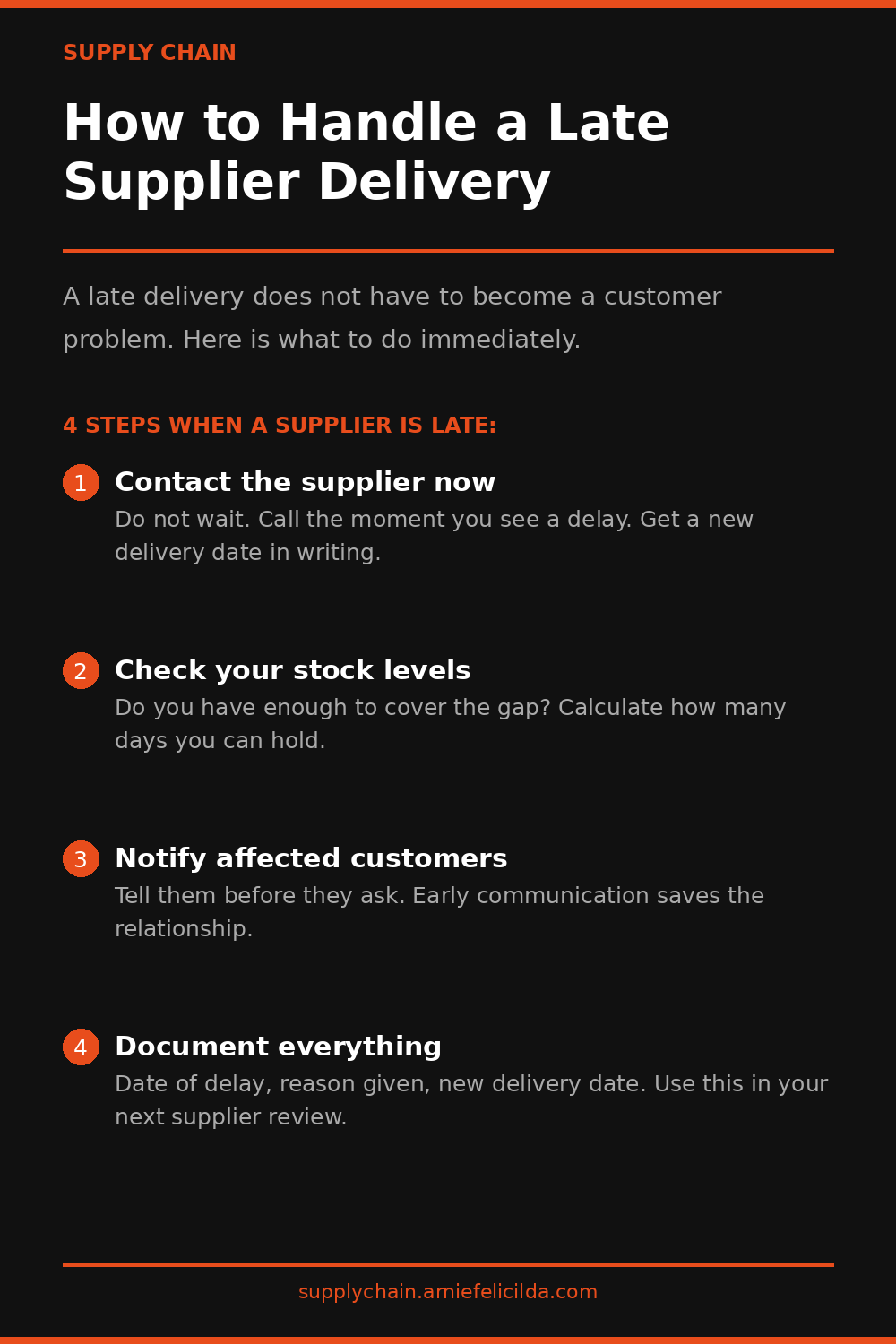
4 Steps When a Supplier Is Late
Contact the Supplier Immediately
Do not wait. The moment you have reason to believe a delivery will be late - whether from a tracking update, a missed confirmation, or a gut feeling based on past experience - contact the supplier directly. Ask for the current status and a revised delivery date in writing. A written revised date creates accountability.
Check Your Current Stock Levels
How many units do you have on hand right now? At your current rate of sales, how many days of stock does that represent? That number tells you how long you can hold before the delay becomes a customer problem. If you have 14 days of stock and the delay is 7 days, you have room to manage. If you have 3 days of stock, you need to act on the next step immediately.
Notify Affected Customers Before They Ask
If the delay will affect customer orders, tell them before they contact you. A proactive message - even one that delivers bad news - preserves the relationship. Customers who hear about a delay from you before it affects them almost always respond better than customers who discover it themselves.
Document Everything
Record the date you identified the delay, the reason given by the supplier, the revised delivery date, and what action you took. This documentation serves two purposes: it becomes the basis for your next supplier performance review, and it protects you if the delay creates a claim or dispute.
After the Delivery Arrives
Once the delayed delivery arrives, update your supplier's performance record. A single delay may be an exception. Two delays in a quarter is a pattern. Three delays is a supplier risk that needs to be addressed formally - either through a performance conversation or by accelerating your backup supplier qualification.
For more on this topic, read How to Track Supplier Performance Without a Formal System. You may also find How to Build a Backup Supplier Plan useful for the next step.
Coming Soon - SCM Book 01
The Resilient Supply Chain
Supplier relationships, risk planning, and operational continuity for managers who cannot afford a disruption. Join the waitlist to be first when it drops.
Join the Waitlist