Most businesses acknowledge the risk of single-supplier dependency and do nothing about it until a supplier fails. Then they spend two to four weeks finding, qualifying, and onboarding a backup under time pressure, paying premium prices and accepting lower quality standards because they have no leverage and no time.
The same work done calmly, before a disruption, takes the same amount of time and costs nothing extra. The difference is entirely in when you do it.
What a Backup Supplier Plan Actually Is
A backup supplier plan is not a list of suppliers you might call someday. It is a pre-qualified alternative for each of your critical supplier relationships - a supplier you have already contacted, already received a sample from, and already confirmed can meet your requirements. When your primary supplier fails, the backup plan activates in hours, not weeks.
The goal is not to use your backup suppliers regularly. The goal is to have them ready so that a single supplier failure never becomes a customer-facing problem.
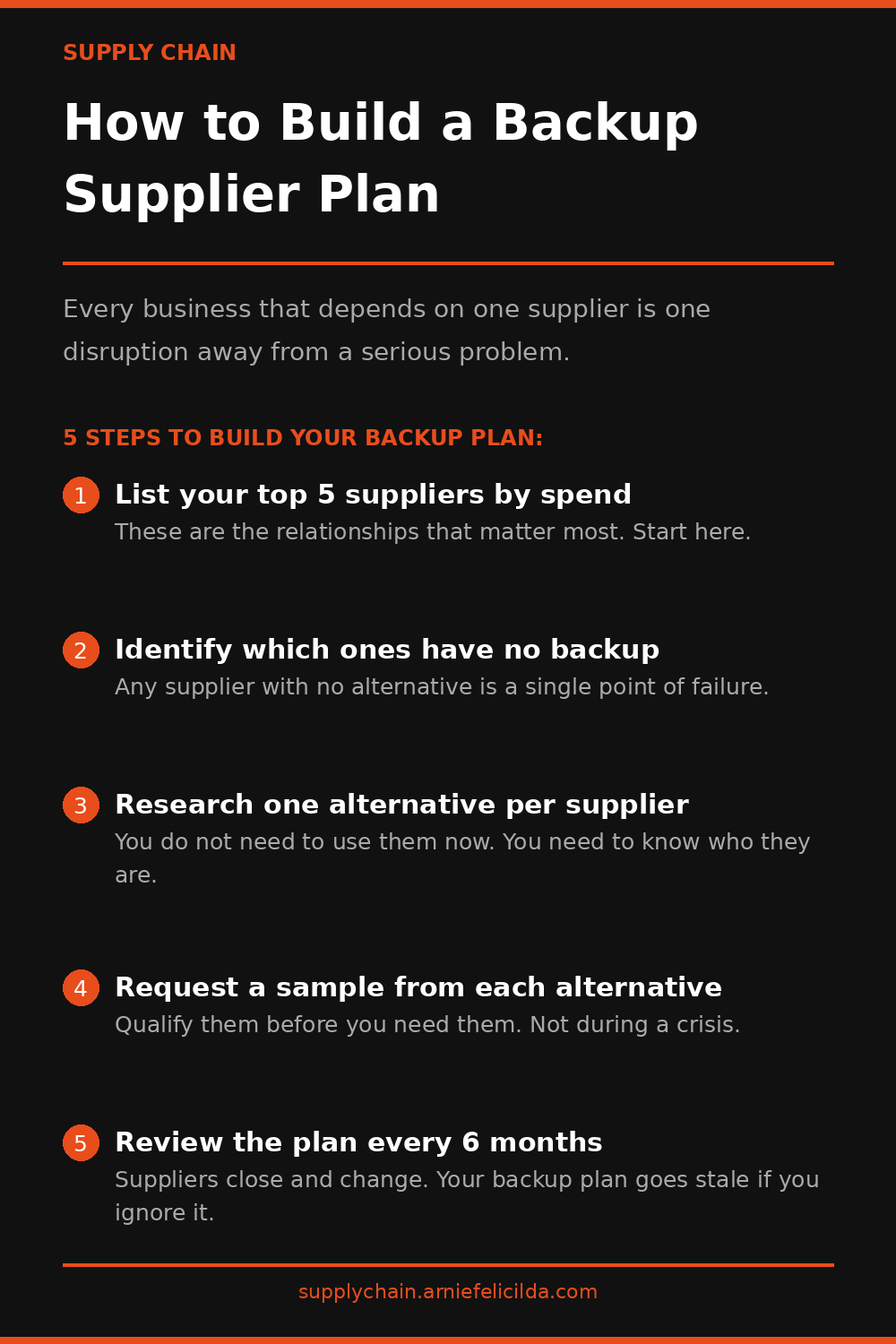
5 Steps to Build Your Backup Plan
List Your Top 5 Suppliers by Spend
Start with the suppliers who represent the most significant share of your purchasing. These are the relationships where a disruption would have the largest impact on your business. A failure in a supplier who represents 30 percent of your purchasing is a different problem than a failure in one who represents 3 percent.
Identify Which Ones Have No Backup
For each supplier on your list, ask: if this supplier stopped delivering tomorrow, what would I do? If the honest answer is I do not know, that supplier is a single point of failure. Prioritize these first.
Research One Alternative Per Supplier
You do not need a perfect alternative. You need a viable one. Search for suppliers who produce similar products in the same general region. Get a quote. Understand their lead time and minimum order quantity. You are not committing to anything - you are gathering enough information to know they are a real option.
Request and Approve a Sample
A backup supplier you have never tested is not actually a backup - it is a name on a list. Request a sample from each alternative. Inspect it against your quality requirements. If it passes, that supplier is qualified. If it does not, find a different alternative.
Review the Plan Every 6 Months
Suppliers go out of business, change ownership, shift their product focus, or stop accepting new customers. A backup plan that was accurate a year ago may no longer be viable today. Build a twice-yearly review into your planning calendar to confirm each backup supplier is still active and capable.
The Minimum Viable Backup Plan
If you do nothing else, identify your two most critical supplier relationships and find one qualified alternative for each. Two qualified backups cover the highest-impact disruption scenarios for most small businesses. That is achievable in a single afternoon of research and a few weeks of sample evaluation.
For more on this topic, read Supply Chain Risk Assessment - 5 Hidden Risks Most Businesses Ignore. You may also find How to Track Supplier Performance Without a Formal System useful for the next step.
Coming Soon - SCM Book 01
The Resilient Supply Chain
Supplier relationships, risk planning, and operational continuity for managers who cannot afford a disruption. Join the waitlist to be first when it drops.
Join the Waitlist